





Exploring both fields allowed STAGE to design interactive experiences capable of turning abstract concepts into concrete, participatory encounters.

Hands-On Data:
Experiencing ageism through interaction
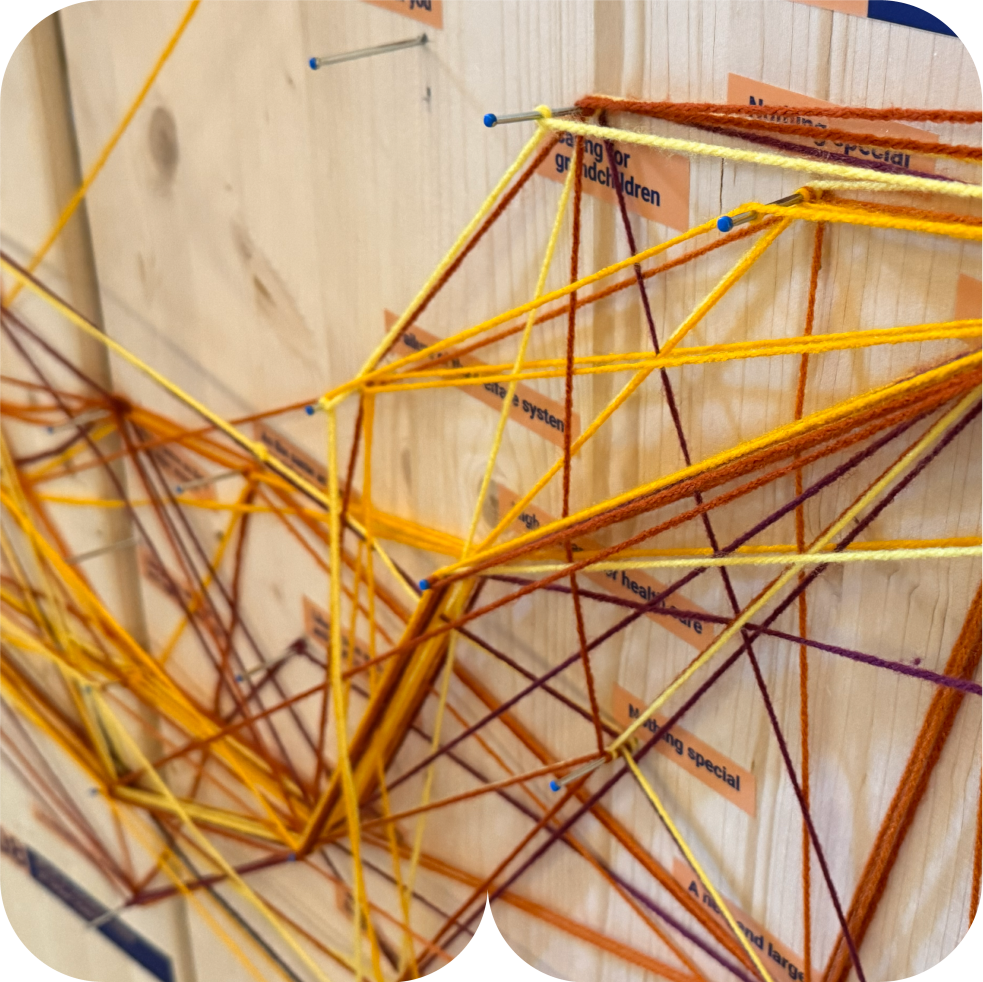
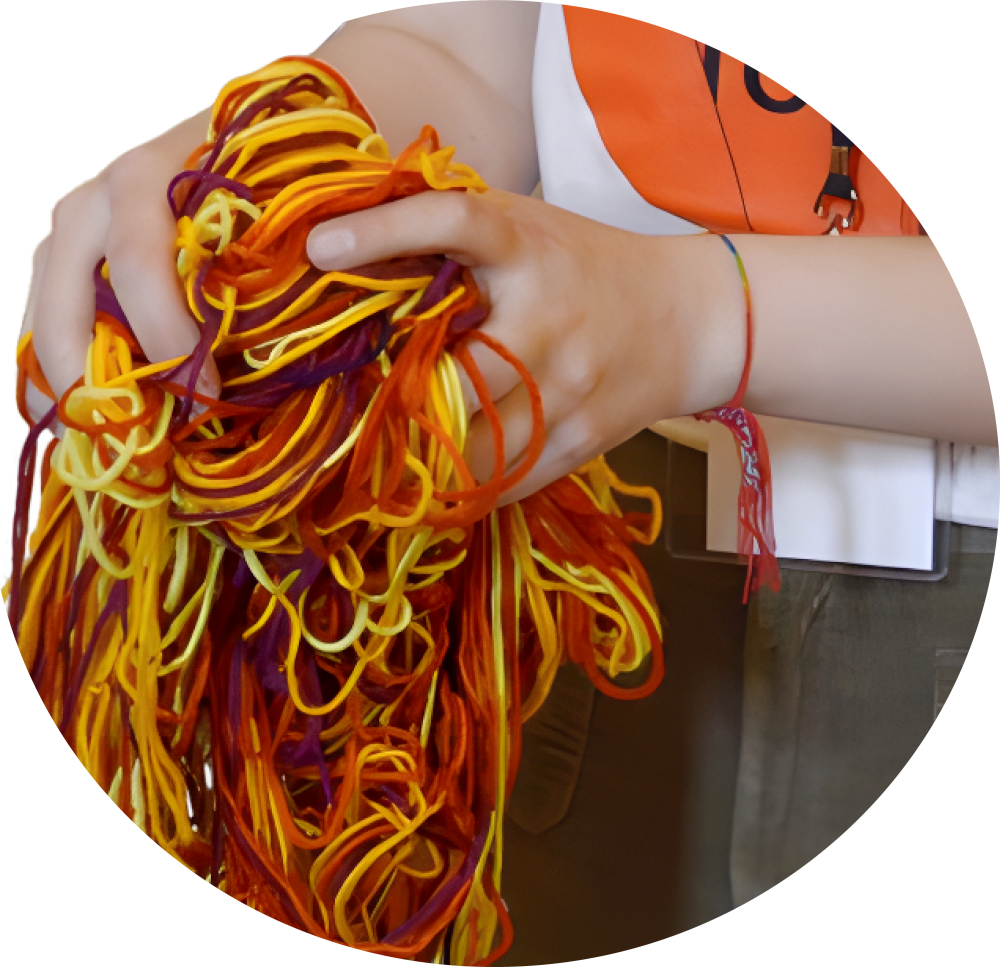
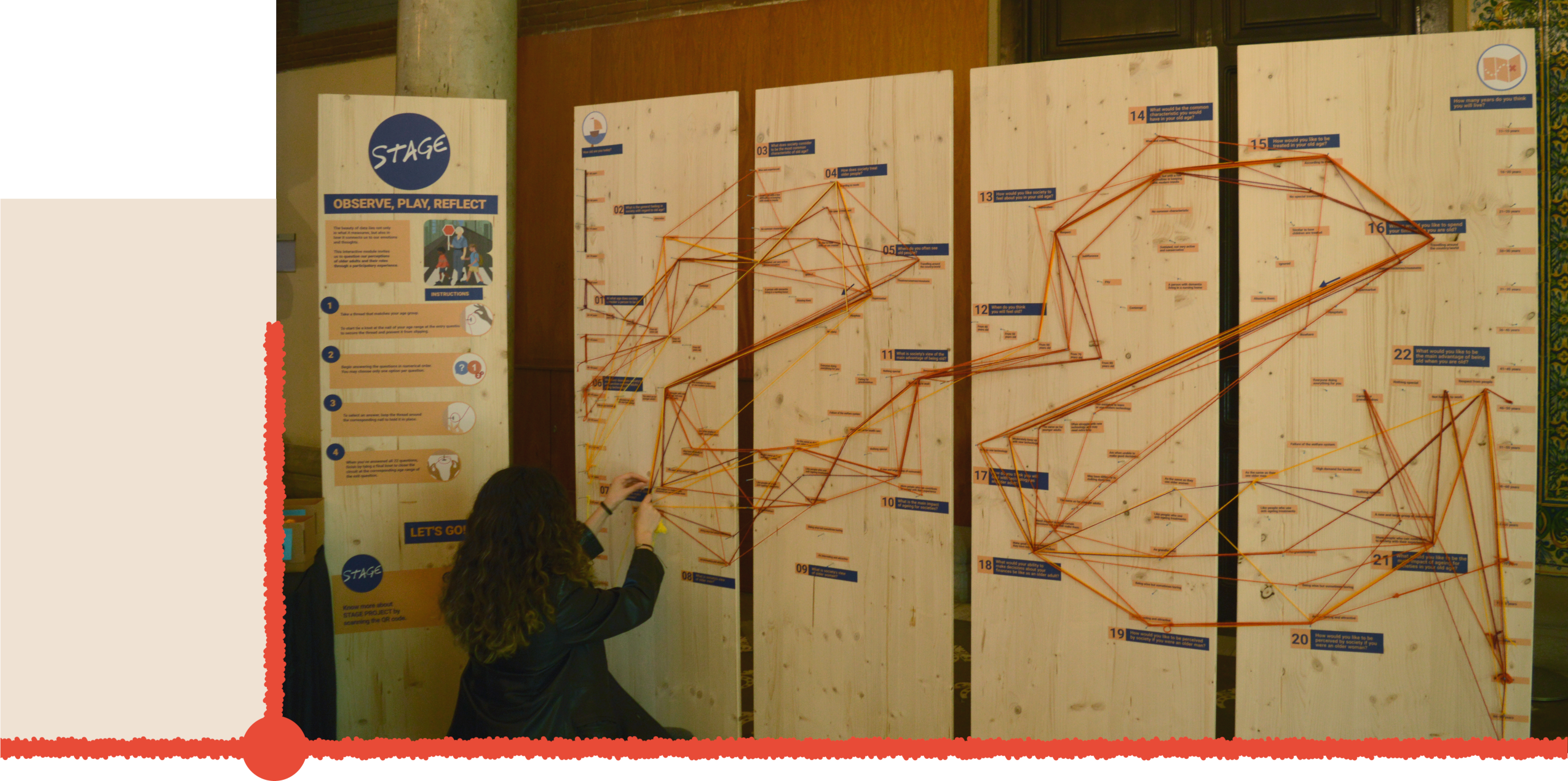
The installation developed by a team of researchers, artists and science communicators in the context of STAGE WP 2 and WP 10, consisted of a circular arrangement of prompts and two rounds of questions. Participants selected a thread representing their age group and stretched it across the space to indicate their answers. As each user contributed, the installation evolved into a three-dimensional network of perceptions and expectations.
THIS APPROACH ACHIEVED THREE THINGS SIMULTANEOUSLY:
It visualised attitudes toward ageing
through colour, shape, and structure.
It physicalised the data, allowing
participants to co-create the dataset
through movement and touch.
It provided a collective experience,
revealing generational differences
and similarities in real time.
Want to share your answers too?
Click here to add your perspective to this collaborative exercise on ageism.

QUESTION 1:
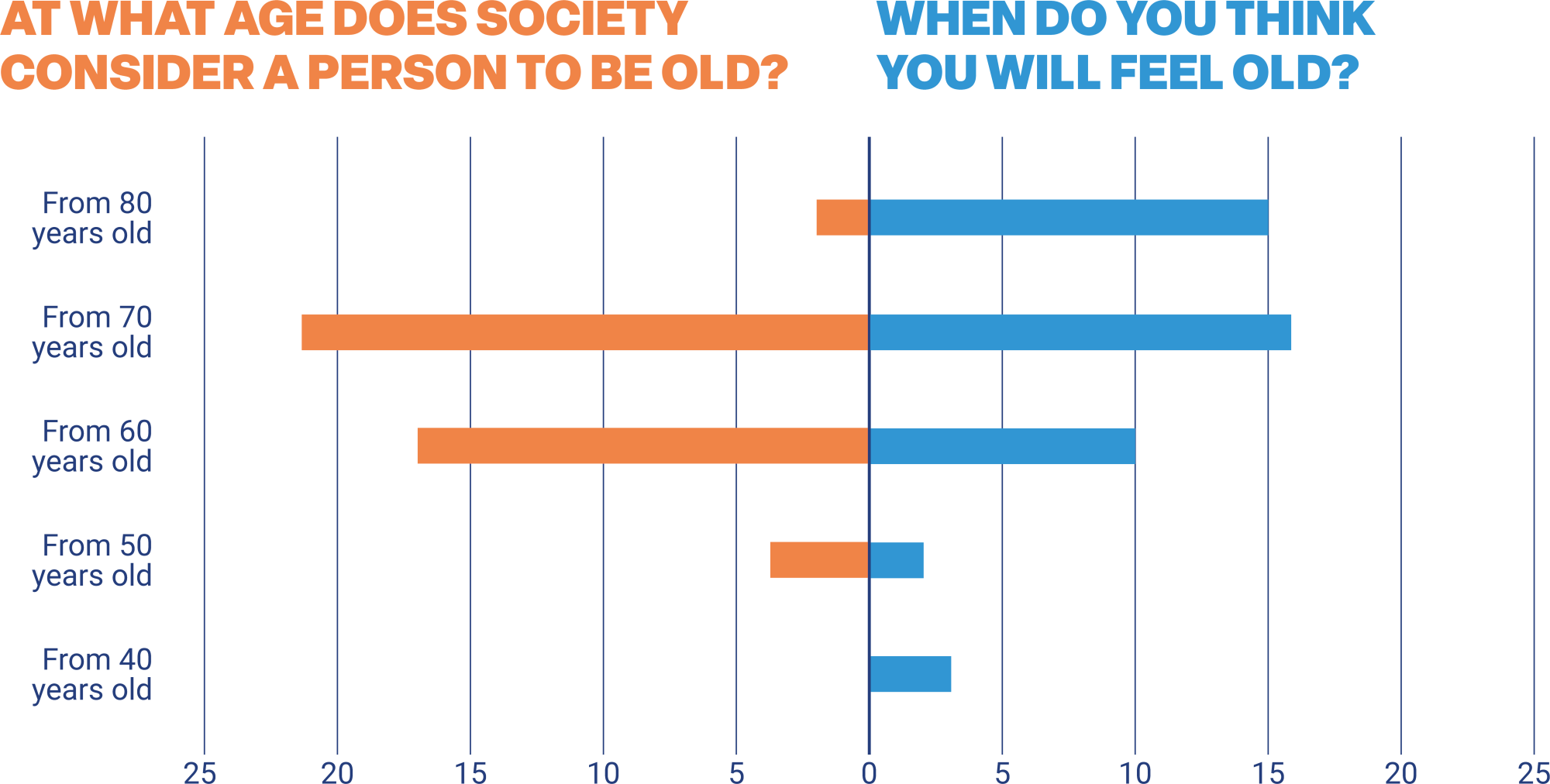
At what age does society consider a person to be old?
I'M NOT OLD, YOU ARE!
This contrast highlights a clear emotional distance: ageing is something we are quicker to assign to others than to accept for ourselves. “Old” becomes a label that belongs to someone else, somewhere further down the road. The results suggest that ageing is not defined by age alone, but by perception — and perhaps by fear.

QUESTION 2:
What is the general feeling in society with regard to old age?
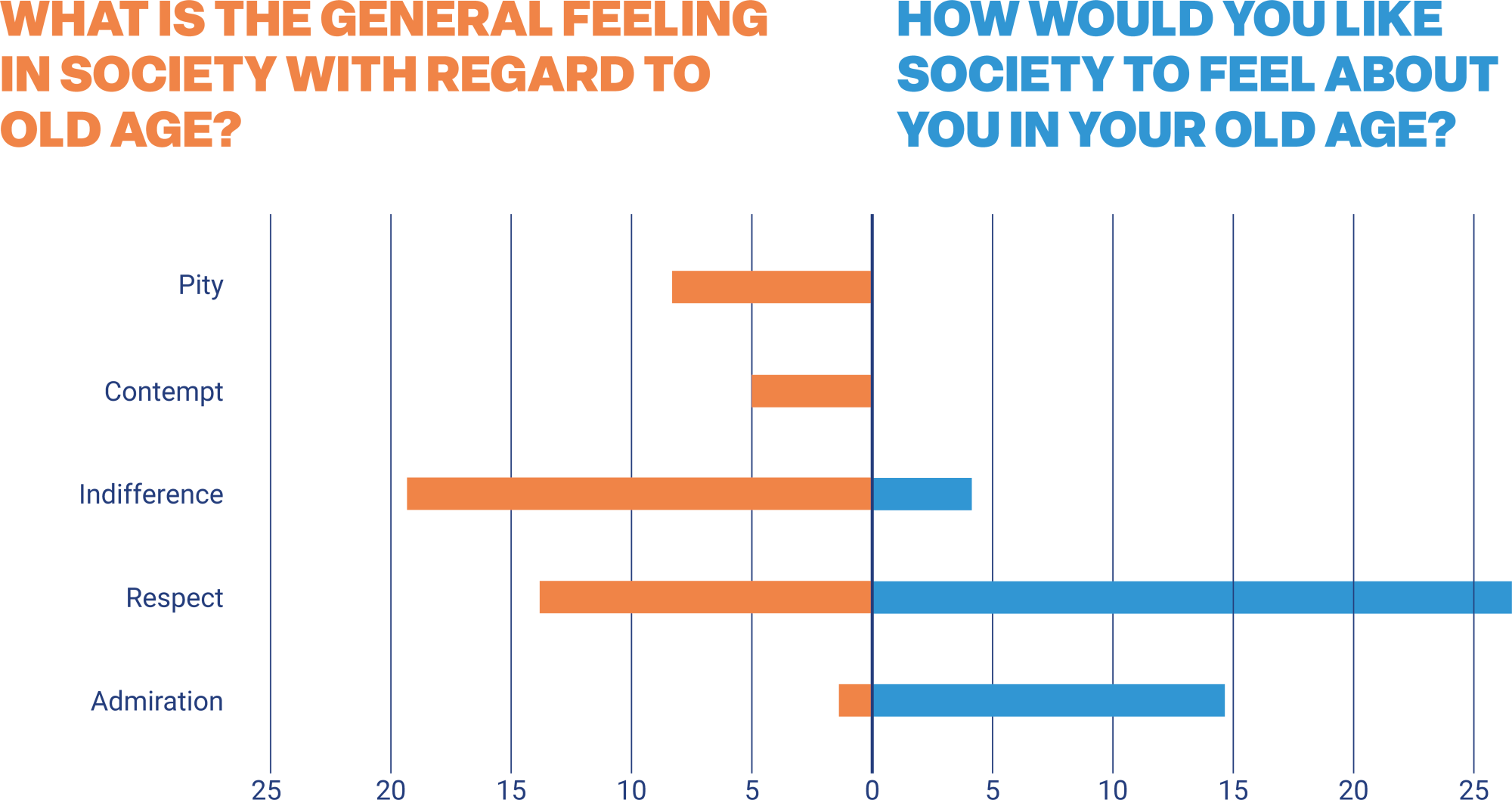
All I ask for is dignity
Yet, when the focus turns inward, the narrative changes completely. Respondents overwhelmingly expressed a desire to be met with respect and admiration in their later years. The gap between how society is perceived to behave and how individuals wish to be treated is striking, and revealing.
It suggests that while respect is deeply valued on a personal level, it is not consistently reflected in collective attitudes towards ageing.

QUESTION 3:
What does society consider to be the most common characteristic of old age?
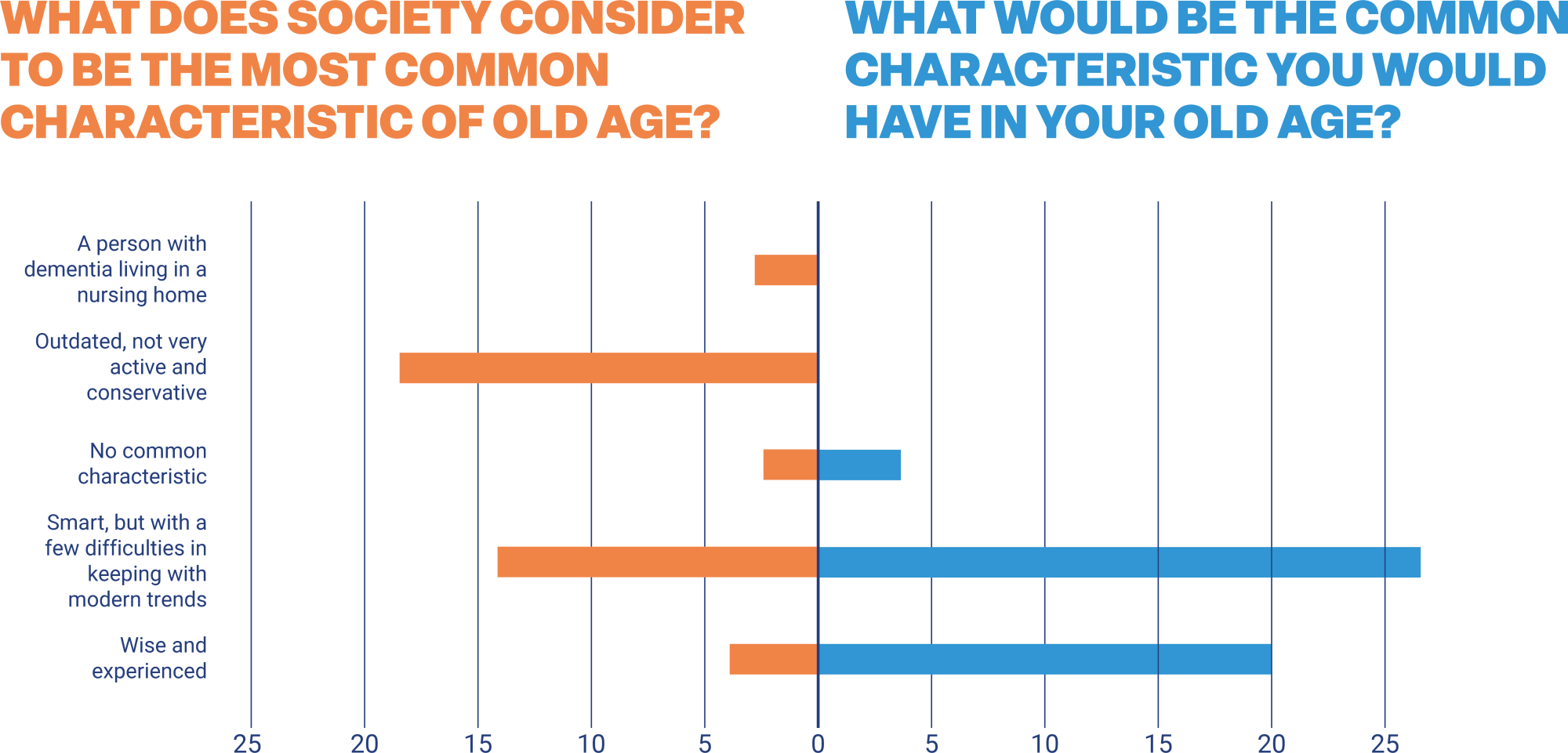
My experience and wisdom — with your new trends
However, when respondents imagine their own older selves, a different picture emerges. While many still acknowledge the possibility of finding new trends challenging, they strongly associate their future selves with wisdom and experience. Ageing, in this sense, is seen less as decline and more as accumulated knowledge.
The contrast suggests that stereotypes persist when we look outward, but soften when we look inward.
QUESTION 4:
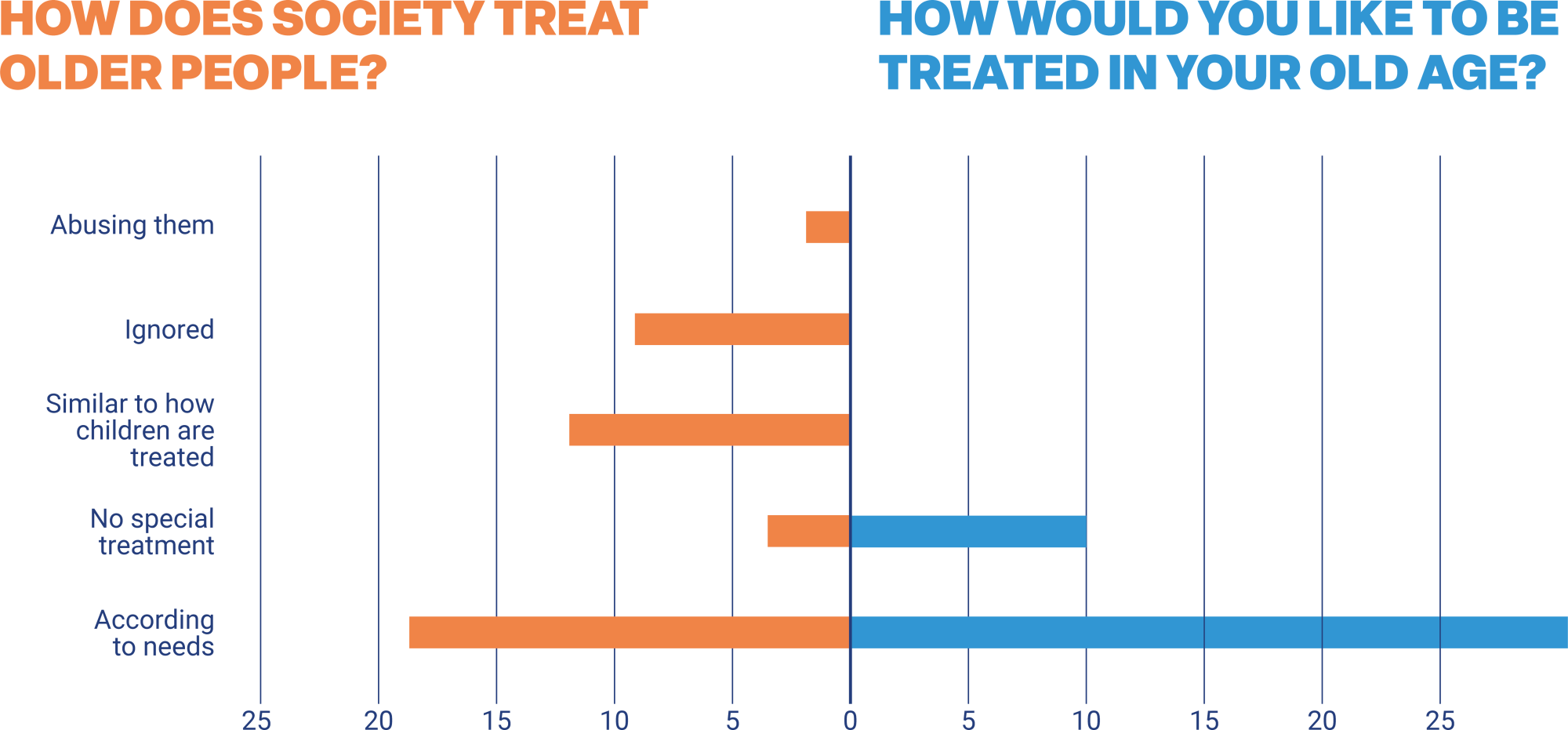
The fine balance between care and autonomy
In contrast, when imagining their own future, respondents express a strong preference for a balanced approach: having their needs recognised and supported, without being subjected to unnecessary special treatment. What they seem to seek is not protection, but respect for autonomy.
This highlights a key issue in conversations about ageing — support should empower, not diminish.
QUESTION 5:
Where do you often see old people?
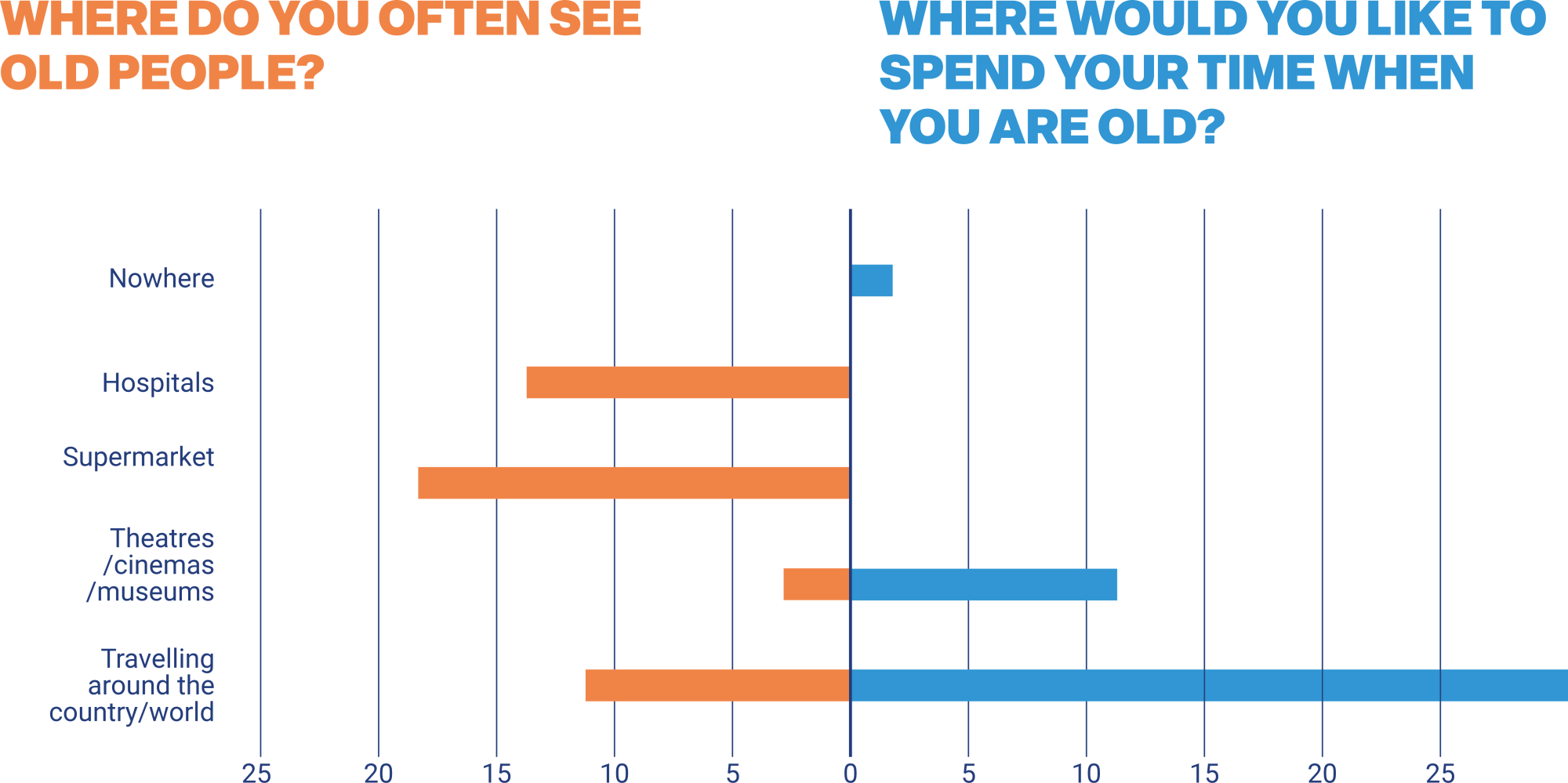
Seen by necessity, imagined by choice
However, when imagining their own later years, respondents picture something very different. They overwhelmingly see themselves travelling, visiting theatres, cinemas, and museums — spaces connected to pleasure, curiosity, and personal fulfilment.
The contrast is telling. Older people are often seen where they need to be, while individuals imagine themselves where they want to be. Ageing, it seems, is framed externally as survival, but internally as life still being lived.
QUESTION 6:
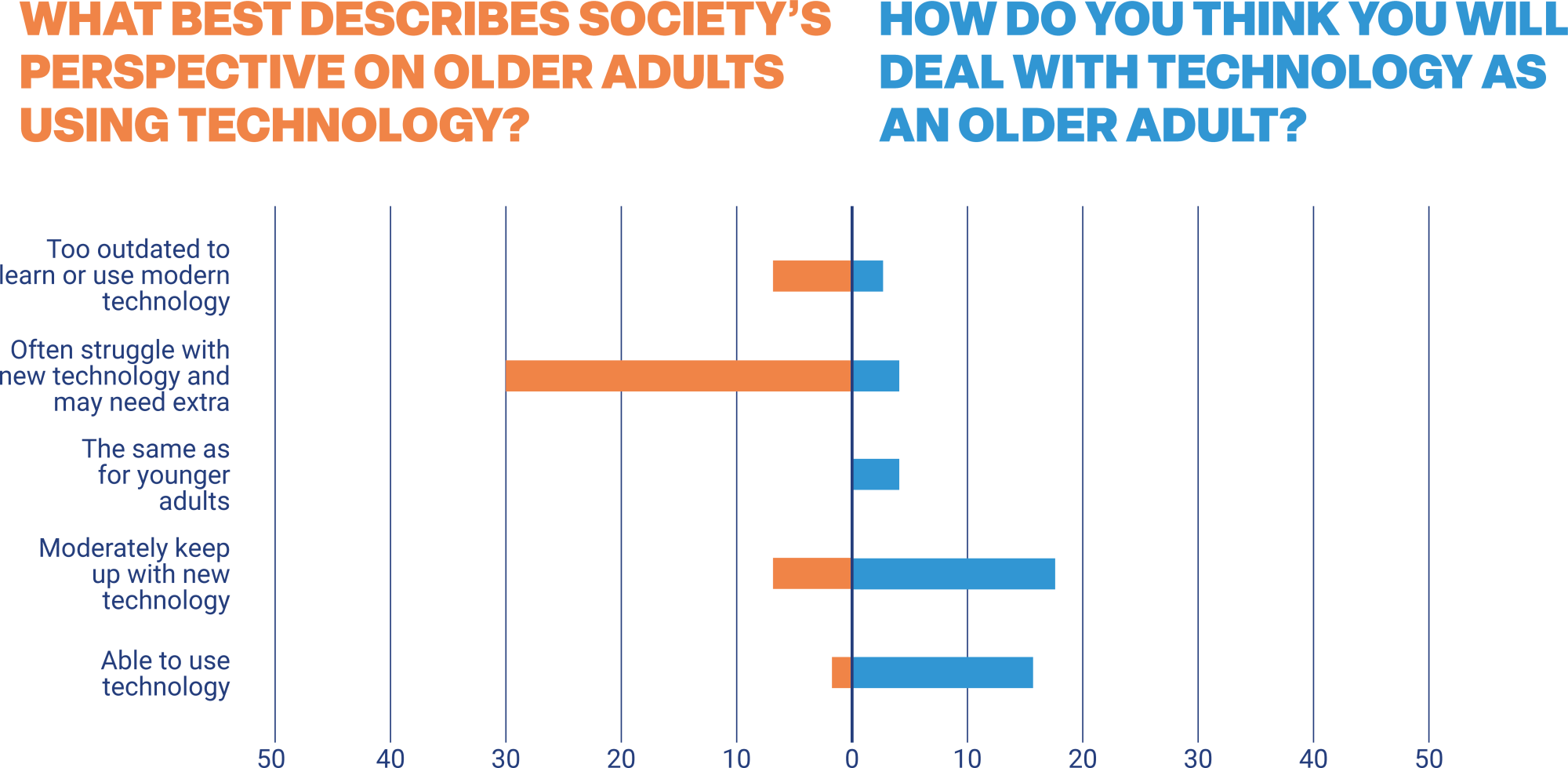
Intuitive technology — intuitive for whom?
Yet, that optimism does not extend to how they view older adults today. Society, in their view, largely assumes that older people struggle with technology and need extra help.
This contradiction suggests that technological difficulty is often attributed to age itself, rather than to design, accessibility, or opportunity.
Question 7:
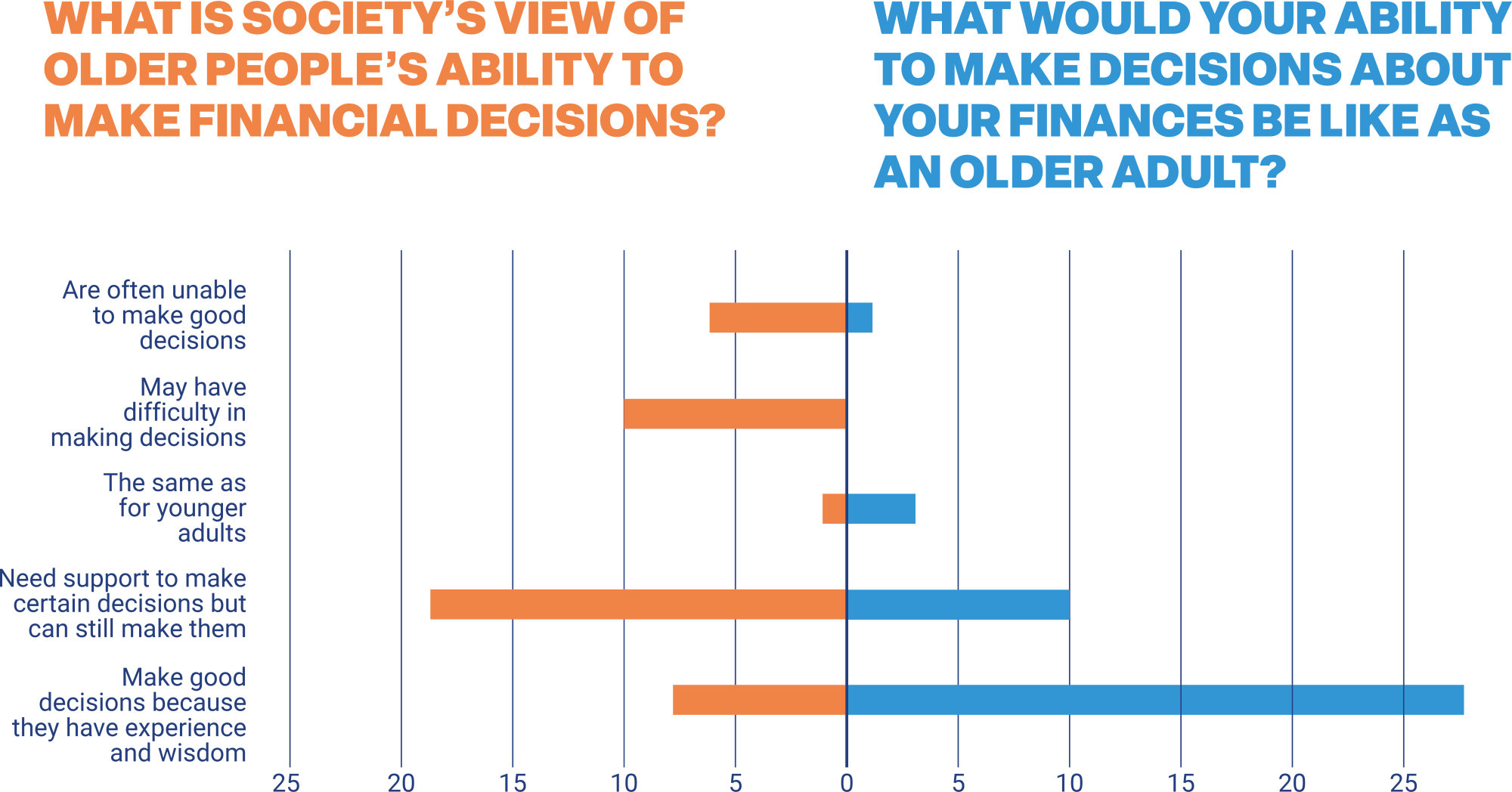
My money, my decision
However, when respondents imagine themselves in that position, the answer is clear and confident: they believe they will make good financial decisions based on their life experience.
Once again, competence is something we readily claim for ourselves, but hesitate to extend to others.
Question 8:
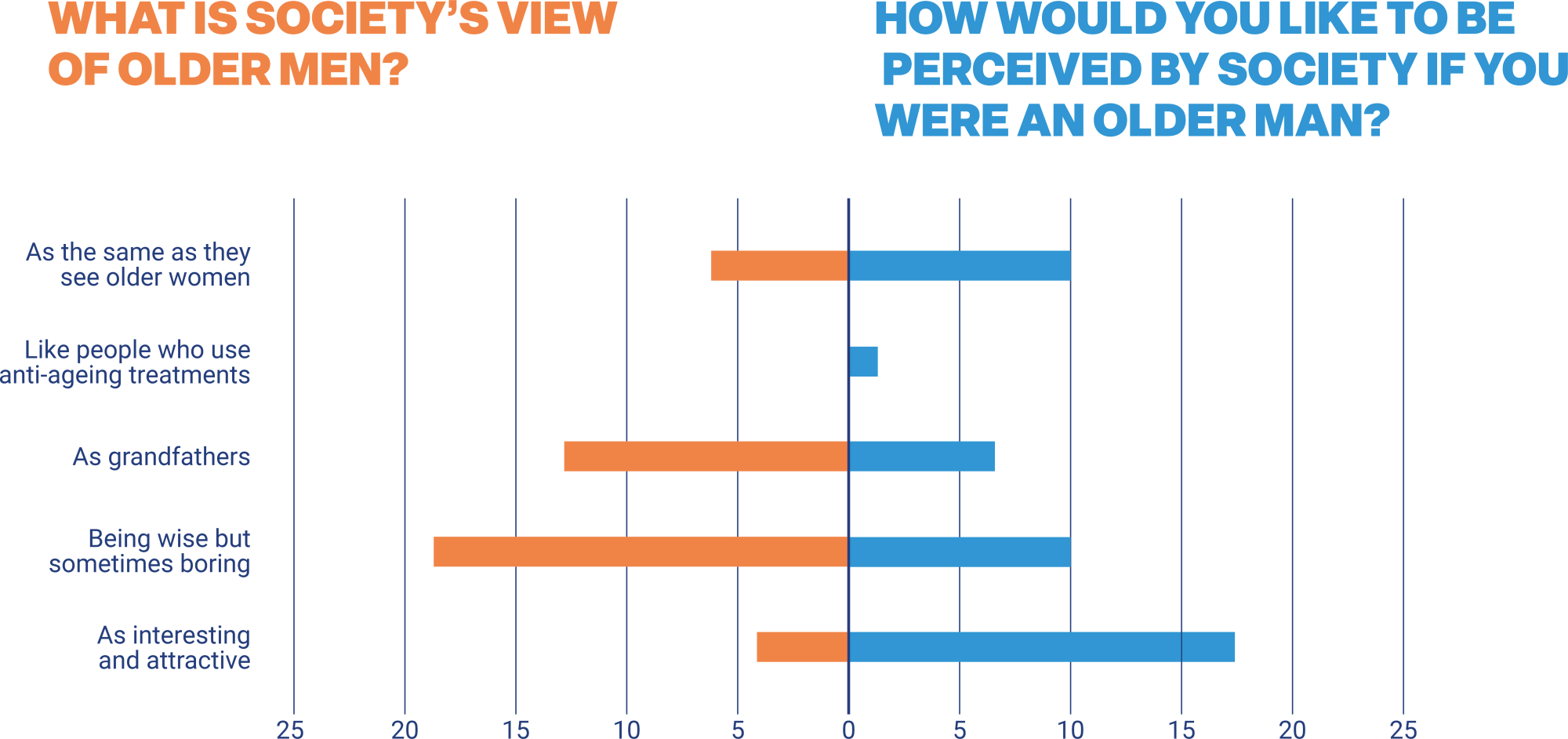
More than wise — still interesting
They would prefer to be seen as interesting and attractive, while still retaining wisdom. The desire is not to reject age, but to expand what it represents.
Question 9:
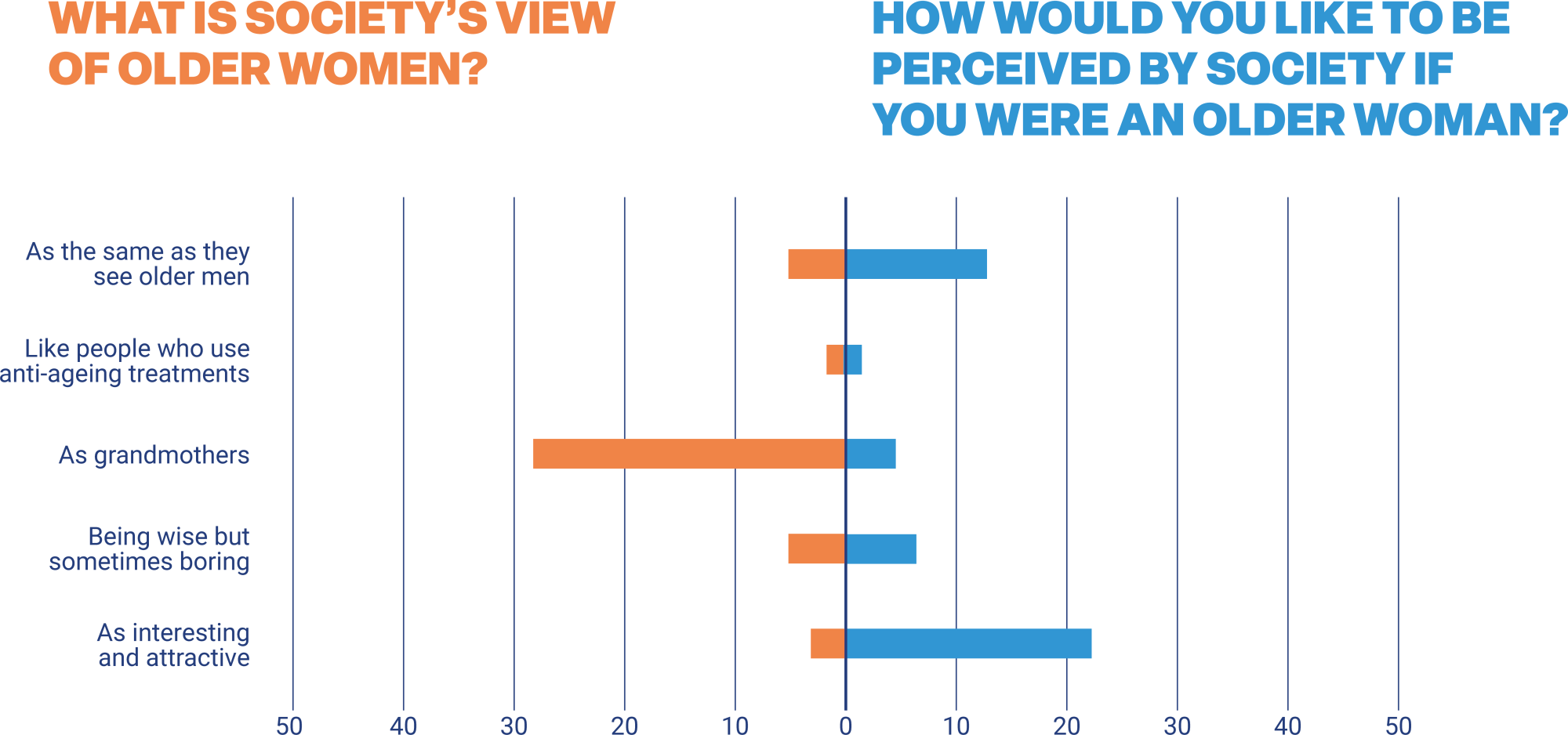
In short? “Grandmothers”
Yet, when respondents imagine themselves as older women, they want something different. They wish to be seen as interesting, attractive, or simply in the same way as older men.
This reveals a particularly strong gender bias in how ageing is framed — one that narrows women’s identities more quickly and more rigidly.
Question 10:
Burden or contribution?
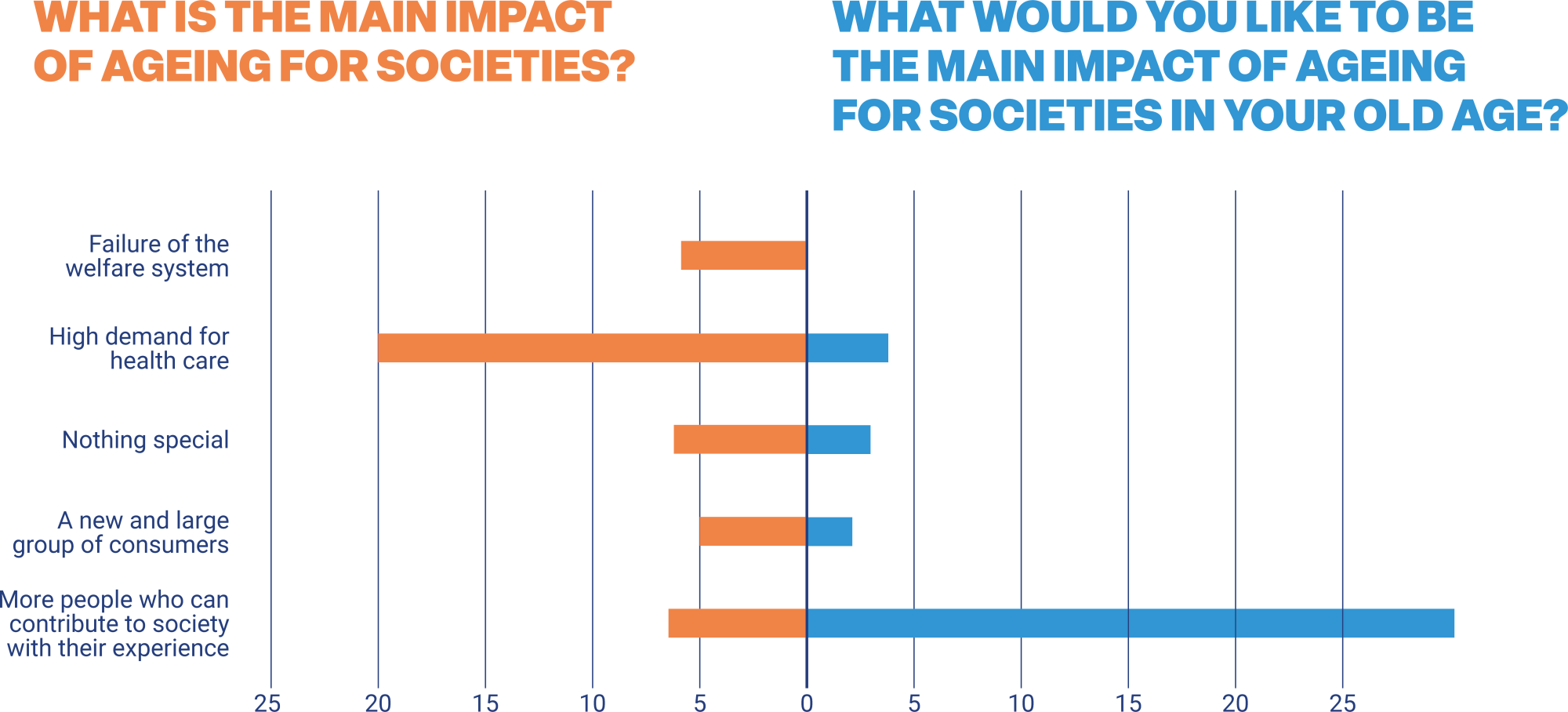
According to participants, society tends to associate ageing primarily with increased demand for healthcare, followed by concerns about the welfare system. These views frame ageing as a challenge — even a problem.
However, when respondents consider the impact they would like older people to have, the narrative shifts. The most selected answer is clear: older adults as contributors, bringing experience and knowledge to society.
Ageing, then, is not inherently a burden — it is shaped by how we choose to value it.
Question 11:
The quiet sweetness of ageing
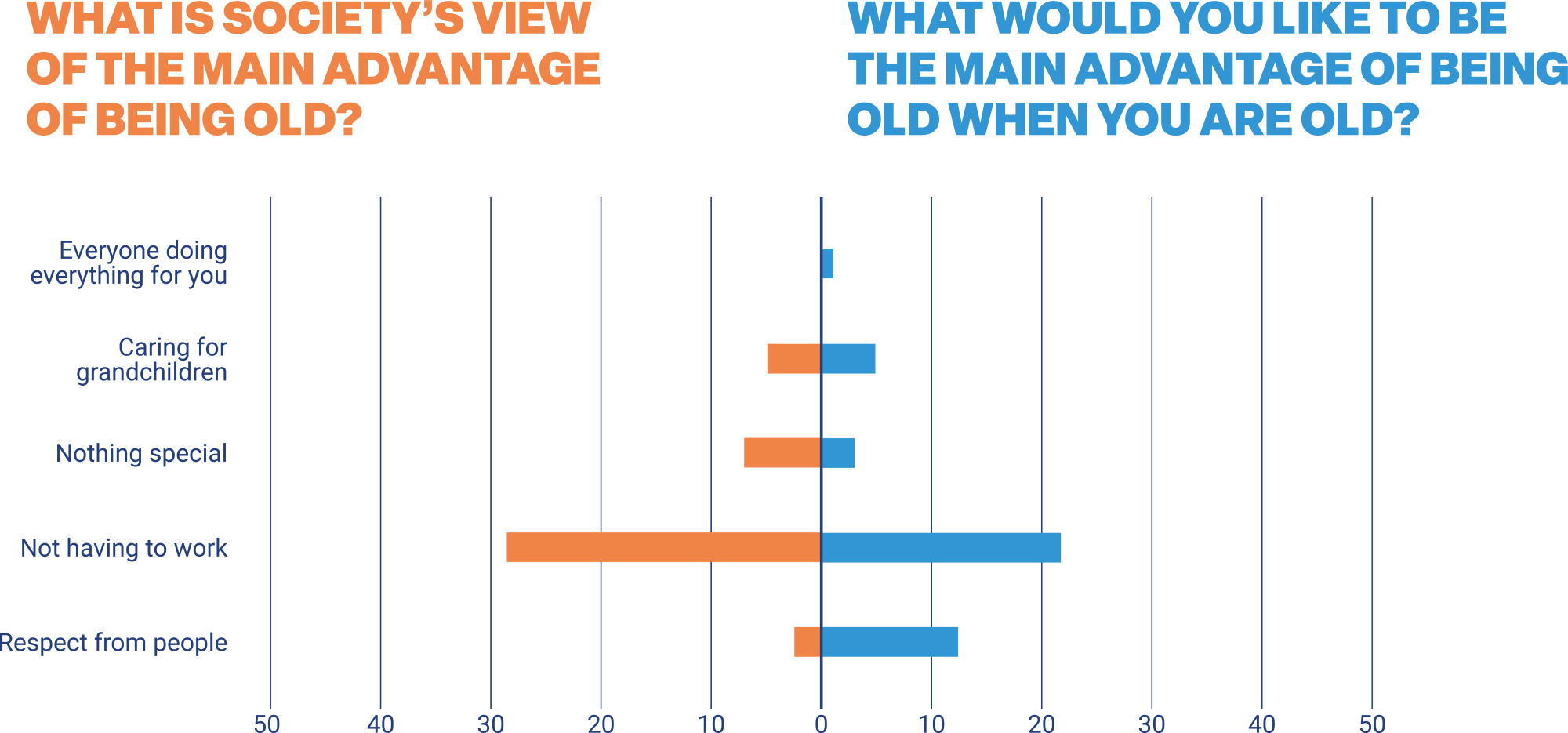
When asked about the advantages of old age, participants consistently pointed to one answer above all others: not having to work. This was true both for how society views ageing and for how individuals imagine their own future.
Respect and caring for grandchildren followed, but at a distance. The desire for rest, freedom from obligation, and time reclaimed for oneself stands out as the most valued reward of ageing.
Perhaps this reflects not only how we see old age, but how we experience work and time throughout our lives.
REFERENCES:

Wilson, N. G. (s. f.). The Vienna Dioscorides and the History of Scholia – ProQuest. https://www.proquest.com/openview/8632ed270ad36c5018f35be1eaa38e41/1?pq-origsite=gscholar&cbl=1819401

Bonnet-Bidaud, J., Praderie, F., & Whitfield, S. (2009). The Dunhuang chinese sky: a comprehensive study of the oldest known star atlas. arXiv (Cornell University). https://doi.org/10.48550/arxiv.0906.3034

Tomaselli, C. (s. f.). The Vienna Dioscurides – SmartHistory. Smarthistory.
https://smarthistory.org/the-vienna-dioscurides/

M. Islam and S. Jin, “An Overview of Data Visualization,” 2019 International Conference on Information Science and Communications Technologies (ICISCT), Tashkent, Uzbekistan, 2019, pp. 1-7, doi: 10.1109/ICISCT47635.2019.9012031.

Dragicevic, P., Jansen, Y., Vande Moere, A. (2021). Data Physicalization. In: Vanderdonckt, J., Palanque, P., Winckler, M. (eds) Handbook of Human Computer Interaction. Springer, Cham. https://doi.org/10.1007/978-3-319-27648-9_94-1

Wang, Y., Liu, Y., Yu, L., Ji, C., & Liu, Y. (2025). A comparative study of table-sized physicalization and digital visualization. Journal Of Visualization, 28(3), 511-533. https://doi.org/10.1007/s12650-025-01056-7